
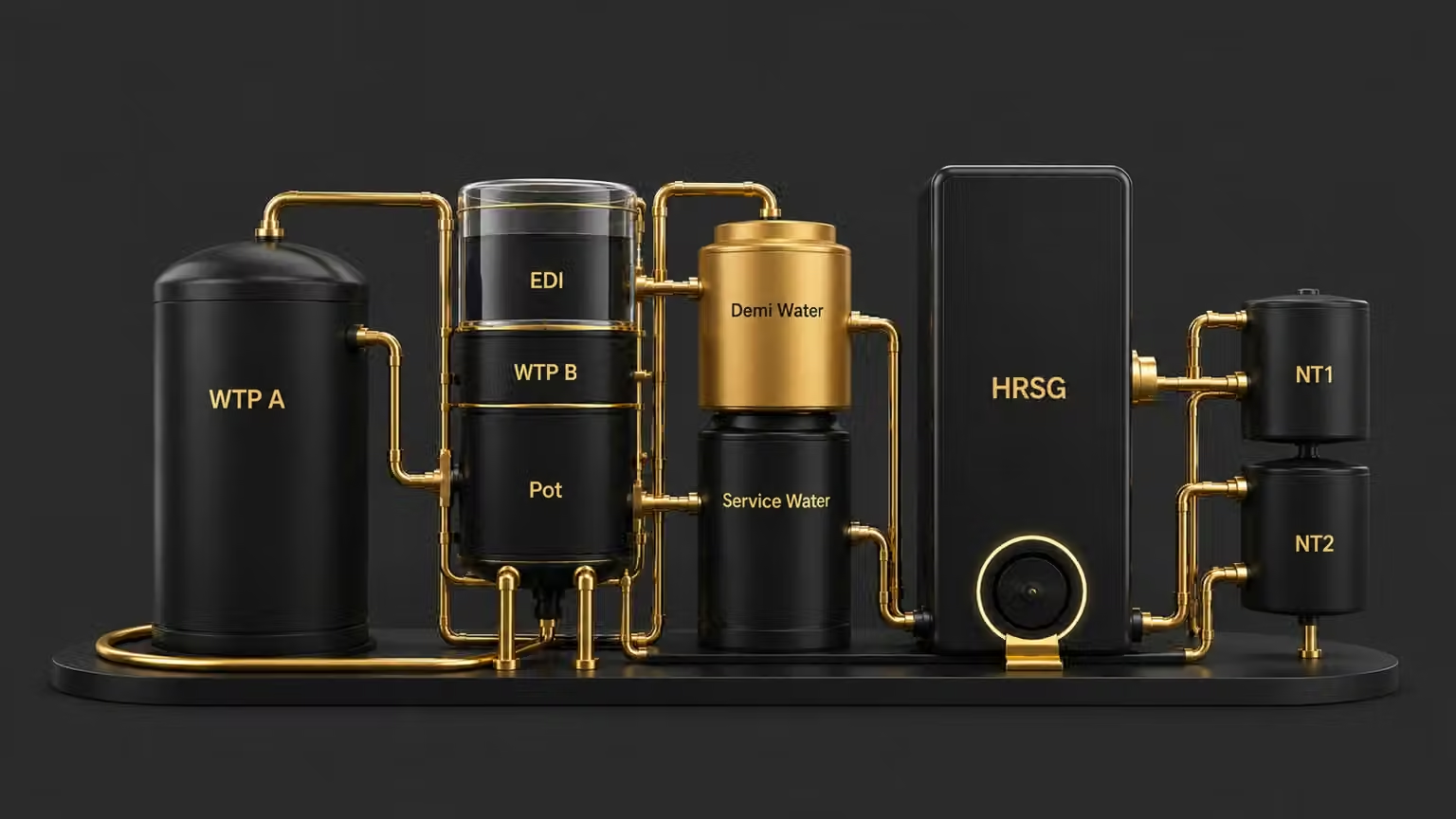
Combined Cycle Power Plant Water System Optimization
FEATURED Project
Restoring Operational Control
Plant water and wastewater operation had become increasingly dependent on external support. The systems still had capability, but everyday operation needed clearer process understanding and practical control.
ENVASI supported operational improvement by clarifying system behavior, reducing chemical usage, increasing recycling performance, and aligning operation more closely with the original design intent.
Project Summary
This project involved the reconfiguration of the water treatment and wastewater management systems of a coastal combined cycle power plant.
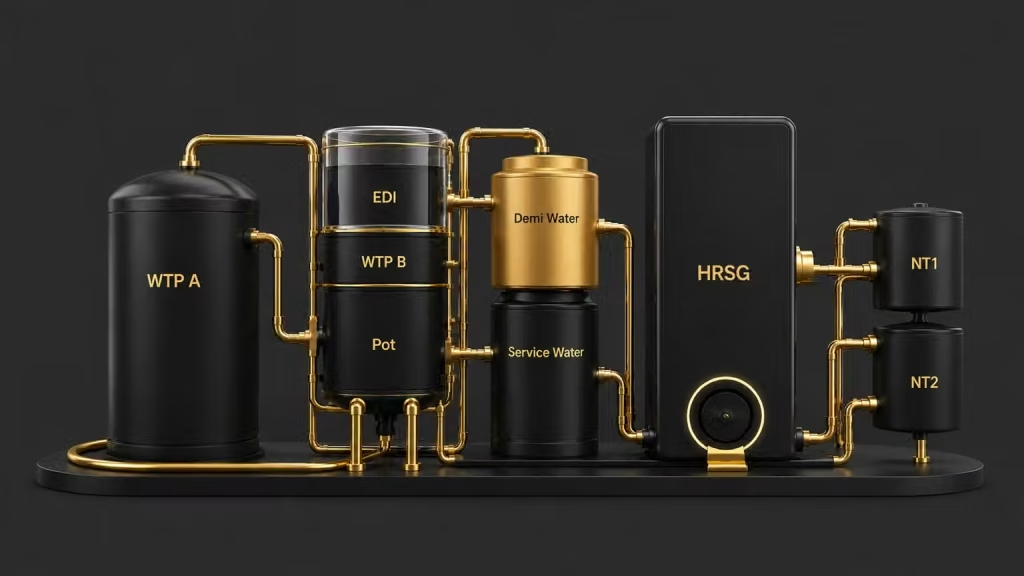
The original arrangement left the plant dependent on external infrastructure, with limited operational visibility, limited feedback from the subcontracted water treatment system, and no structured reuse of recoverable water streams.
Through a phased, practical retrofit, the plant restored control over its water systems, reused HRSG blowdown, reduced liquid waste, improved raw-water reliability, and significantly lowered operating cost — without disrupting power production.
Engineering approach
From fragmented operation to integrated control
The solution was developed from operational observation, chemistry follow-up, and field experience.
Rather than treating water production, blowdown, service water, potable water, and wastewater as isolated systems, the project approached them as one connected operating envelope.
The main engineering objective was to give the plant direct control over water production, water quality, blowdown recovery, wastewater routing, raw-water reliability, monitoring, and operational response.
Observation
Operational constraints identification, recurring inefficiencies, and opportunities hidden within day-to-day plant operation.
Understanding
Evaluation of interactions between water sources, treatment systems, recovery streams, and operating requirements.
Integration
Reconfiguration, routing, recovery, and treatment processes into a connected and flexible operating system.
Control
Improved visibility, water-quality control, operational flexibility, and plant ownership of critical processes.
Engineering Interventions
Main Interventions
The project was not a single equipment upgrade. It was a controlled reconfiguration of water sources, recoverable streams, routing logic, and plant ownership.
Recover HRSG Blowdown Water
HRSG blowdown was converted from a discharged stream into a reusable water source through recovery, conditioning, and filtration.
Wastewater Treatment Redesign
Wastewater routing was redesigned to separate recoverable streams from general waste while preserving the original operating paths.
Operational Flexibility & Control
Recoverable streams and alternative water sources were integrated through the WTP system, improving control of feedwater quality, product-water quality, and overall process efficiency.
Bring Systems
Under Plant Control
The water treatment system was relocated and integrated inside plant boundaries, improving access, ownership, monitoring, and response.
measured outcomes
Results
By reconfiguring water sources, recoverable streams, and treatment-system routing, the plant transformed a fragmented water-management process into an integrated and controllable system.
The interventions reduced operating costs and wastewater generation, improved water-quality control and process efficiency, increased operational flexibility, and strengthened the plant’s autonomy and resilience under changing operating conditions.
You must be logged in to post a comment.